

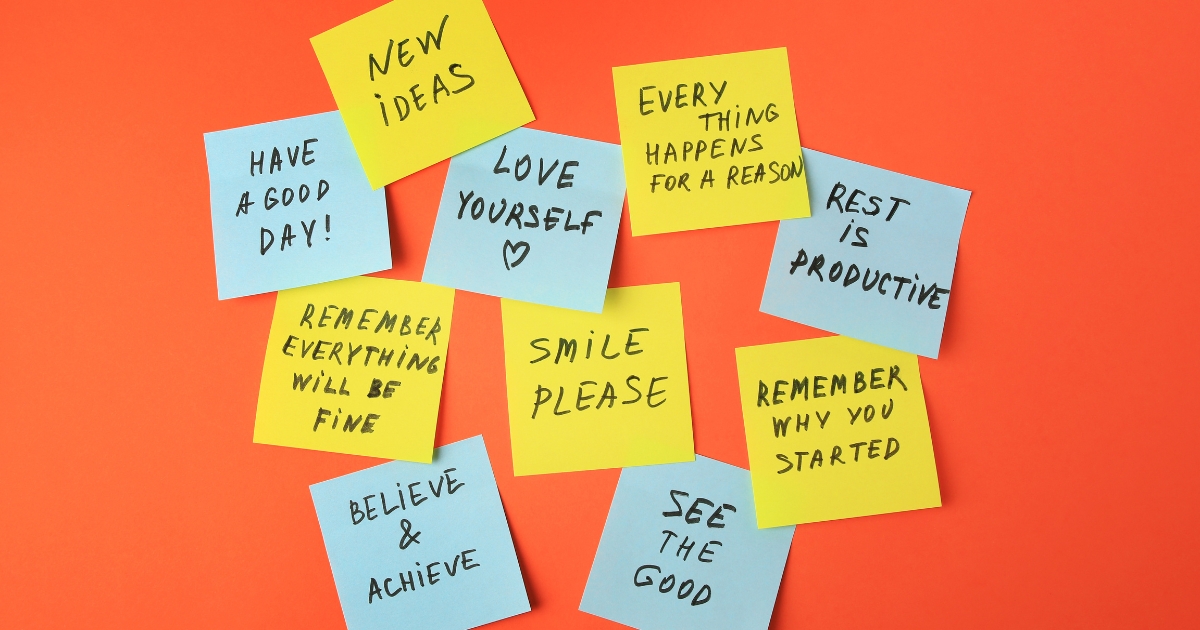
Negative thought patterns can feel like an endless loop — self-criticism, doubt, and fear repeating until they seem like truth. Words of affirmation offer a research-backed tool to interrupt that cycle. When practiced consistently, affirmations help reshape how the brain processes self-related information, creating new pathways that support healthier thinking. This guide provides targeted affirmation statements organized by mental health need, explains the neuroscience behind why they work, and offers a practical framework for creating personalized affirmations that address your specific challenges.
Affirmations are not magic. They are a cognitive tool grounded in neuroplasticity and evidence-based therapy principles. When combined with professional support, they become part of a broader strategy for managing anxiety, building self-esteem, and sustaining mental wellness. Whether you are exploring daily affirmations for mental health or wondering what affirmations in therapy are, this resource connects self-help practices to clinical insight.

The Science Behind Affirmations and Neural Rewiring
Neuroplasticity — the brain’s ability to reorganize itself by forming new neural connections — is the foundation of how affirmations work. Every time you repeat a positive statement about yourself, you activate specific neural pathways. With repetition, those pathways strengthen, making the new thought pattern easier to access and the old negative loop less automatic. This is the neurological foundation of why words of affirmation can reshape self-perception over time.
Research using functional MRI scans has shown that self-affirmation activates brain regions associated with self-related processing and reward, particularly the ventromedial prefrontal cortex. When people practice affirmations regularly, these regions show increased activity, suggesting that the brain is literally rewiring its response to self-concept. The effect is similar to what happens in cognitive behavioral therapy, where repeated cognitive restructuring changes thought patterns over time.
| Brain Region | Function | How Affirmations Engage It |
|---|---|---|
| Ventromedial Prefrontal Cortex | Self-evaluation and reward processing | Activates during self-affirmation, reinforcing positive self-view |
| Posterior Cingulate Cortex | Self-referential thought and memory | Strengthens new self-narratives through repetition |
| Amygdala | Threat detection and emotional response | Reduced reactivity to self-threat over time with consistent practice |
How to Create Personalized Affirmations That Actually Work
Pre-written affirmation lists are helpful starting points, but the most powerful affirmations are those you create yourself. Creating powerful affirmations begins with identifying the specific negative thought patterns you want to change. Identify recurring criticisms or fears in your internal dialogue. Common examples include “I’m not good enough,” “I always fail,” or “People will judge me.” Once you identify the pattern, you can craft an affirmation that directly counters it.
Effective affirmations follow a clear structure. They are written in the present tense, use positive language, and feel personally relevant. Instead of “I will be confident,” use “I am confident in my abilities.” Instead of “I am not anxious,” which keeps the focus on anxiety, use “I feel calm and grounded.” This framework for how to write personal affirmations ensures your statements feel authentic rather than forced.
Creating effective affirmations also means making them specific and believable. A vague statement like “I am amazing” may feel hollow if you struggle with self-worth. A more targeted affirmation — “I am capable of learning from mistakes” — addresses a specific fear and feels more achievable. When crafting affirmations, specificity increases believability and impact. As those become easier to accept, you can build toward broader statements.
- Use present tense language to signal the affirmation as current reality, not distant hope.
- Focus on what you want to feel or believe, not what you want to avoid or stop.
- Make it personal by addressing your specific fears, doubts, or challenges.
- Keep it concise — one clear sentence is more powerful than a paragraph.
- Repeat it daily, ideally at the same time, to build a consistent neural pathway.
- Pair affirmations with a grounding practice like deep breathing to reinforce the message.
Affirmations Organized by Mental Health Need
Different mental health challenges require different affirmation approaches. Words of affirmation for anxiety focus on safety and calm, while those for self-esteem building emphasize worth and capability. The following lists provide eight affirmations for five common areas: anxiety, depression, self-esteem, trauma recovery, and daily mental wellness. Use these as templates, adapting language to fit your experience.
Affirmations for Anxiety
These affirmation statements for anxiety help interrupt the worry cycle and reinforce a sense of safety, especially when practiced during acute stress.
- I am safe in this moment.
- I can handle uncertainty without losing myself.
- My breath anchors me when my mind races.
- I release what I cannot control.
- I trust myself to manage whatever comes.
- I am learning to sit with discomfort without fear.
- My body knows how to calm itself.
- I am stronger than my anxious thoughts.
Affirmations for Depression
- I am worthy of care, especially on hard days.
- My feelings are valid, and they will shift.
- Small steps still move me forward.
- I am more than my worst moments.
- I am allowed to ask for help.
- My presence matters, even when I cannot feel it.
- I trust that healing is possible.
- I am doing my best with what I have.
Affirmations for Self-Esteem
These affirmations for self-esteem building target core beliefs about worth and capability, making them particularly useful when self-criticism intensifies.
- I am enough exactly as I am.
- I celebrate my progress, not just perfection.
- I am worthy of love and belonging.
- I trust my judgment and my voice.
- I accept myself, flaws included.
- I am proud of how far I have come.
- I deserve respect from myself and others.
- I am capable of growth and change.
Affirmations for Trauma Recovery
- I am safe now, and I can trust that.
- My past does not define my future.
- I have survived, and I am still here.
- I reclaim my power one day at a time.
- I am allowed to heal at my own pace.
- I am not broken; I am healing.
- I deserve peace after pain.
- I am learning to feel safe in my own skin.
Affirmations for Daily Mental Wellness
- I start today with intention and kindness.
- I am open to what this day brings.
- I choose gratitude over complaint.
- I make space for joy, even in small moments.
- I am learning and growing every day.
- I am resilient, even when I do not feel strong.
- I give myself permission to rest and recharge.
- I am proud of showing up for myself.
| Mental Health Need | Core Focus | When to Use |
|---|---|---|
| Anxiety | Safety, calm, present-moment grounding | During worry spirals, before stressful events, or as part of breathing exercises |
| Depression | Worth, hope, self-compassion | On low-energy days, when negative self-talk intensifies, or during therapy homework |
| Self-Esteem | Self-acceptance, capability, respect | After criticism, during self-doubt, or as part of morning intention-setting |
| Trauma Recovery | Safety, agency, healing pace | During flashbacks, before trauma-focused therapy, or when feeling triggered |
| Daily Wellness | Gratitude, resilience, intention | Morning routines, evening reflections, or as a general mental health practice |

Affirm Your Path to Wellness with Professional Support at Palo Alto Mental Health
Affirmations are a valuable self-help tool, but they are most effective when integrated into a broader treatment plan. If you are struggling with persistent anxiety, depression, trauma symptoms, or low self-esteem, affirmations alone may not be enough. Professional therapy provides the structure, insight, and accountability that self-help practices cannot replace. Cognitive behavioral therapy, dialectical behavior therapy, and other evidence-based approaches teach you how to identify and challenge negative thought patterns at their root, not just cover them with positive statements. Palo Alto Mental Health offers comprehensive treatment programs that combine therapeutic modalities with practical skill-building, including the strategic use of affirmations as part of cognitive restructuring. Our clinicians work with you to develop personalized coping strategies that address your unique challenges and goals. If you are ready to move beyond self-help and invest in lasting change, reach out today to learn how we can support your mental health journey.
FAQs
These frequently asked questions address common concerns about using affirmations as part of mental health care, from scientific evidence to practical integration with therapy.
1. Do affirmations really work, or are they just positive thinking?
Affirmations are more than wishful thinking when practiced consistently. Neuroscience research shows that repeated self-affirmation activates brain regions involved in self-processing and reward, suggesting that the practice can reshape how we evaluate ourselves. However, affirmations work best when paired with action and professional support, not as a substitute for addressing underlying mental health conditions.
2. How long does it take to see results from daily affirmations?
Most people notice subtle shifts in self-perception after 21 to 30 days of consistent practice. Neuroplasticity requires repetition, so daily use is essential. If you are dealing with clinical anxiety, depression, or trauma, affirmations may take longer to feel effective and should be combined with therapy for best results.
3. What is the difference between affirmations and positive self-talk?
Positive self-talk examples include any encouraging internal dialogue, while affirmations are structured statements designed to counter specific negative beliefs. Affirmations are deliberate and repeated, creating a cognitive habit. Positive self-talk is more spontaneous and situational, though both support mental health when used consistently.
4. Can I use affirmations alongside therapy?
Yes, and therapists often encourage it. Affirmations complement cognitive behavioral therapy by reinforcing the cognitive restructuring work done in sessions. Your therapist can help you craft affirmations that target the specific thought patterns you are working to change, making the practice more effective.
5. Are affirmations effective for clinical conditions like depression or anxiety disorders?
Affirmations can support symptom management but are not a standalone treatment for clinical conditions. If symptoms interfere with daily life, professional help is essential. If you or someone you know is in a crisis, call or text 988 to reach the Suicide & Crisis Lifeline, available 24/7.