

Mental health professionals face a persistent challenge: selecting therapeutic exercises that generate measurable therapeutic outcomes rather than simply filling session time. The difference between effective interventions and time-fillers lies in intentional design, evidence-based frameworks, and skilled facilitation that transforms participation into clinical progress. Activities that align with specific treatment goals and incorporate proven therapeutic techniques serve as powerful tools for symptom reduction, skill development, and lasting behavioral change.
This guide presents evidence-based exercises organized by therapeutic objective, with clinical implementation guidance, trauma-informed modifications, and outcome measurement strategies. Each activity draws from established modalities including cognitive-behavioral therapy, dialectical behavior therapy, and interpersonal process work. So what are effective group counseling techniques? The strongest share three traits: they map to a clear treatment goal, they build a specific skill through active practice, and they leave time for therapeutic processing. This guide organizes them into a curated toolkit for facilitating meaningful group sessions across diverse populations and treatment settings.
Evidence-Based Activities for Emotional Regulation and Distress Tolerance
Emotional dysregulation underlies many mental health conditions, making regulation skills a primary treatment target. The following therapeutic group exercises build clients’ capacity to identify, tolerate, and modulate intense emotions without resorting to maladaptive coping strategies.
The Feelings Wheel exercise asks participants to move from broad emotion categories toward precise emotional vocabulary. Facilitators distribute emotion wheels showing concentric rings from basic emotions (angry, sad, happy) to nuanced variations (frustrated, resentful, betrayed). Clients identify a recent emotional experience and work inward on the wheel, landing on the most accurate descriptor. This activity strengthens emotional granularity, which research links to improved regulation capacity and reduced symptom severity.
Grounding and Self-Soothing Practices
The 5-4-3-2-1 Grounding technique offers immediate distress tolerance support. Facilitators guide participants through identifying five things they see, four they can touch, three they hear, two they smell, and one they taste. This sensory-based intervention interrupts rumination and dissociation by anchoring attention in the present moment.
| Activity Name | Primary Skill Target | Session Duration |
|---|---|---|
| Feelings Wheel Exercise | Emotional granularity and labeling | 20 minutes |
| 5-4-3-2-1 Grounding | Present-moment awareness | 15 minutes |
| Progressive Muscle Relaxation | Physiological calming | 20 minutes |
| Thought Record Sharing | Cognitive restructuring | 25 minutes |
Therapeutic Group Exercises That Strengthen Interpersonal Effectiveness and Communication Skills
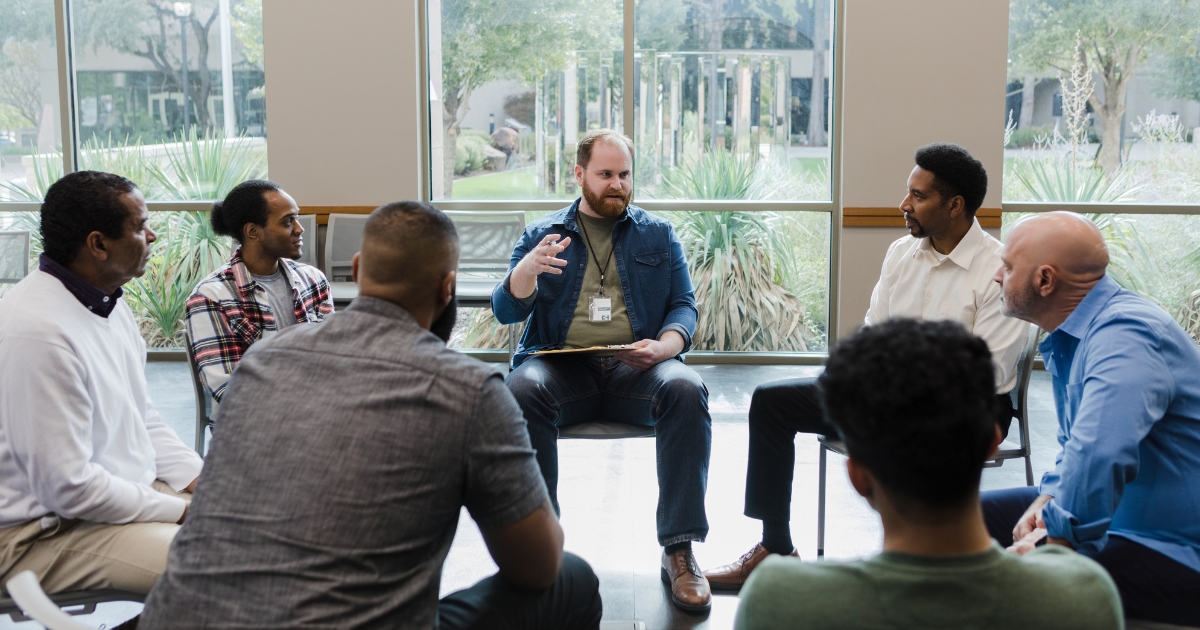
Interpersonal difficulties contribute to many mental health conditions. Understanding how to facilitate group therapy sessions for interpersonal skill-building requires recognizing that practice with real-time feedback creates more lasting change than psychoeducation alone. The following activities build assertiveness, active listening, boundary-setting, and conflict resolution skills through structured practice and feedback. These exercises translate interpersonal skills from abstract concepts into practiced behaviors that clients can apply immediately in their relationships outside treatment.
- DEAR MAN role-plays teach the dialectical behavior therapy skill for making requests and setting boundaries. Pairs practice the seven-step framework while partners provide feedback on delivery, then switch roles. Pairing the exercise with DBT group therapy worksheets—one mapping each step, another for reflection afterward—gives clients a take-home reference they can apply between sessions.
- Active Listening Triads divide participants into speaker, listener, and observer roles. Speakers share a meaningful experience for three minutes while listeners practice reflective responses without advice-giving. Observers note what helped the speaker feel heard and what created disconnection.
- Boundary Setting Scenarios present common situations requiring boundary enforcement (intrusive family member, demanding friend, workplace overreach). Small groups brainstorm assertive responses, then share with the larger group for feedback and refinement.
- Nonviolent Communication practice structures conflict conversations using observations, feelings, needs, and requests. Participants work through real interpersonal tensions while learning to express themselves without blame.
Adapting Communication Activities for Virtual Delivery
Role-play exercises work well in telehealth breakout rooms with two or three participants, then reconvene for whole-group processing. Digital whiteboards facilitate collaborative brainstorming.
Icebreaker Activities and Trust-Building Exercises That Create Therapeutic Group Cohesion
Psychological safety forms the foundation for therapeutic risk-taking in groups. Without trust and cohesion, members withhold vulnerable material and limit their engagement with challenging feedback, making icebreaker exercises essential for establishing the safety needed for deeper therapeutic work. These icebreaker activities for therapy groups establish connection while respecting appropriate boundaries for clinical settings. Unlike casual party games, effective group therapy games for adults pair light engagement with clinical purpose—every prompt is chosen to build safety or surface material worth processing.
Two Truths and a Lie adapted for therapy contexts asks participants to share two true statements and one false statement about their recovery journey, coping strategies, or treatment goals rather than generic facts. Group members guess the lie, then the person reveals the answer and elaborates on the truths. This format allows controlled self-disclosure while building familiarity.
Common Ground Circles help members discover shared experiences without requiring detailed disclosure. The facilitator calls out various experiences (struggled with sleep, found exercise helpful, felt misunderstood by family, tried multiple medications) and participants step forward or raise hands if the statement applies. Observing how many others share similar experiences reduces isolation and normalizes struggles. This works particularly well in early sessions when members are assessing whether the group is a good fit.
Creative Expression and Team-Building Exercises
Collaborative Art Projects assign small groups a shared canvas and art supplies to create a visual representation of recovery, hope, or another therapeutic theme. The process of negotiating artistic decisions, compromising on direction, and building something together mirrors healthy relationship dynamics. Processing questions explore how the group made decisions, handled disagreements, and ensured everyone’s contribution was valued. These team-building exercises for mental health settings work across diverse populations.
| Trust-Building Activity | Appropriate Group Phase | Vulnerability Level |
|---|---|---|
| Two Truths and a Lie (adapted) | Initial sessions (1-3) | Low to moderate |
| Common Ground Circles | First session | Low |
| Collaborative Art Projects | Sessions 2-5 | Low to moderate |
| Group Timeline Creation | Sessions 3-6 | Moderate |
| Values Card Sort (shared) | Sessions 4-8 | Moderate to high |

Activities That Activate Change at Palo Alto Mental Health
Evidence-based group therapy activities provide structure for meaningful therapeutic work, but their effectiveness depends on skilled facilitation within a comprehensive treatment approach. At Palo Alto Mental Health, licensed clinicians lead specialized programs that integrate these activities with individual counseling and family support services. Our groups address anxiety, depression, and trauma through carefully sequenced interventions tailored to each participant’s treatment goals. Whether you’re seeking support for yourself or a loved one, our admissions team can help you determine which options align with your clinical needs and recovery objectives. Contact Palo Alto Mental Health today to learn about current group offerings and begin your journey toward lasting mental health improvement.
FAQs
The following are the most frequently asked questions regarding group therapy.
1. What makes group therapy activities effective versus just being fun exercises?
Effective group therapy activities directly align with specific therapeutic objectives and treatment plan goals, incorporating evidence-based techniques from modalities like CBT, DBT, or psychodynamic therapy. The activity itself matters less than the skilled facilitation and therapeutic processing that follows, where clinicians help clients extract insights and apply learnings to real-life situations.
2. How do therapists choose appropriate group therapy activities for different mental health conditions?
Mental health professionals select activities based on the group’s primary diagnoses, treatment phase, cohesion level, and individual client needs within the group. For example, mood disorder groups might prioritize behavioral activation exercises and cognitive restructuring worksheets, while anxiety-focused groups emphasize exposure-based activities and relaxation techniques.
3. Can group therapy activities be adapted for telehealth or virtual sessions?
Most group therapy activities can be modified for virtual delivery using breakout rooms, digital whiteboards, screen sharing, and chat functions. Therapists may need to adjust activities requiring physical movement or materials, but core therapeutic exercises focusing on discussion, reflection, and skill practice translate well to online platforms.
4. How long should each group therapy activity take during a session?
Most group therapy activities require 15–30 minutes, including introduction, participation, and therapeutic processing, though this varies by activity complexity and group size. Skilled facilitators typically allocate more time for processing and discussion than the activity itself, as the therapeutic value emerges from reflection and application rather than just participation.
5. What are trauma-informed modifications for group therapy activities?
Trauma-informed modifications include offering opt-out options without penalty, avoiding surprise elements or physical touch, providing advance notice of activity content, allowing clients to control their disclosure level, and creating clear safety agreements. Therapists should screen activities for potential triggers and prepare grounding techniques if clients become dysregulated during participation.